Hybridizing Bangkok Chinatown
PAVA Teaching : Design Studio
College of Architecture, Planning and Design, Kansas State University, US
Year 5, ARCH808, Option Studio, Semester 2, January-May 2025
Instructors : Varat Limwibul, Pacharapan Ratananakorn, Otto Chanyakorn
Bangkok's Chinatown, Thailand, was informally settled in 1782 when the city was established as the capital of the Rattanakosin Kingdom. Historically, the Chinese community prospered in trade, and gradually grew as immigrants from China increasingly flooded into Bangkok. Following the signing of the Bowring Treaty in 1855, liberalized international trade making import–export businesses flourished in Bangkok. At this time, numerous piers and warehouses arose in the area. One of the most important events that transformed Bangkok Chinatown was the fire in the second half of the 19th century. The fire cleared the way for the construction of many new roads, including Yaowarat. During the 19th–20th centuries, Chinatown had become Bangkok's main commercial area, as well as an entertainment district hosting opium dens, theaters, nightclubs and gambling houses. Today, Chinatown's commercial prominence gradually declined as businesses and well-off residents moved to newer areas of the expanding city. Those remaining, however, have continued to practice their culture, making Chinatown a center of Chinese food, crafts and religion, despite the general Chinese population's gradual assimilation into Thai society.
The Bangkok Chinatown area is facing significant challenges from global phenomena like climate change, flooding, and sea-level rise, which threaten the connection between people's lives and the area's rich history. The "Hybridizing" studio aims to develop an alternative design strategy that links past memory with people's resilient, complex, and hybrid way of living to ensure heritage adaptation and survival.
With an opportunity to meet with locals, students are guided to understand Bangkok Chinatown as a complex historical setting intertwining with various invisible layers socially, economically, politically and environmentally. Based on studio field works with the wisdom from locals, the studio envisions students to project a critical observation, form their own thesis and propose design which instills a sense of stewardship for cultural heritage, natural resources, and the preservation of local ecologies, while adapting over time.
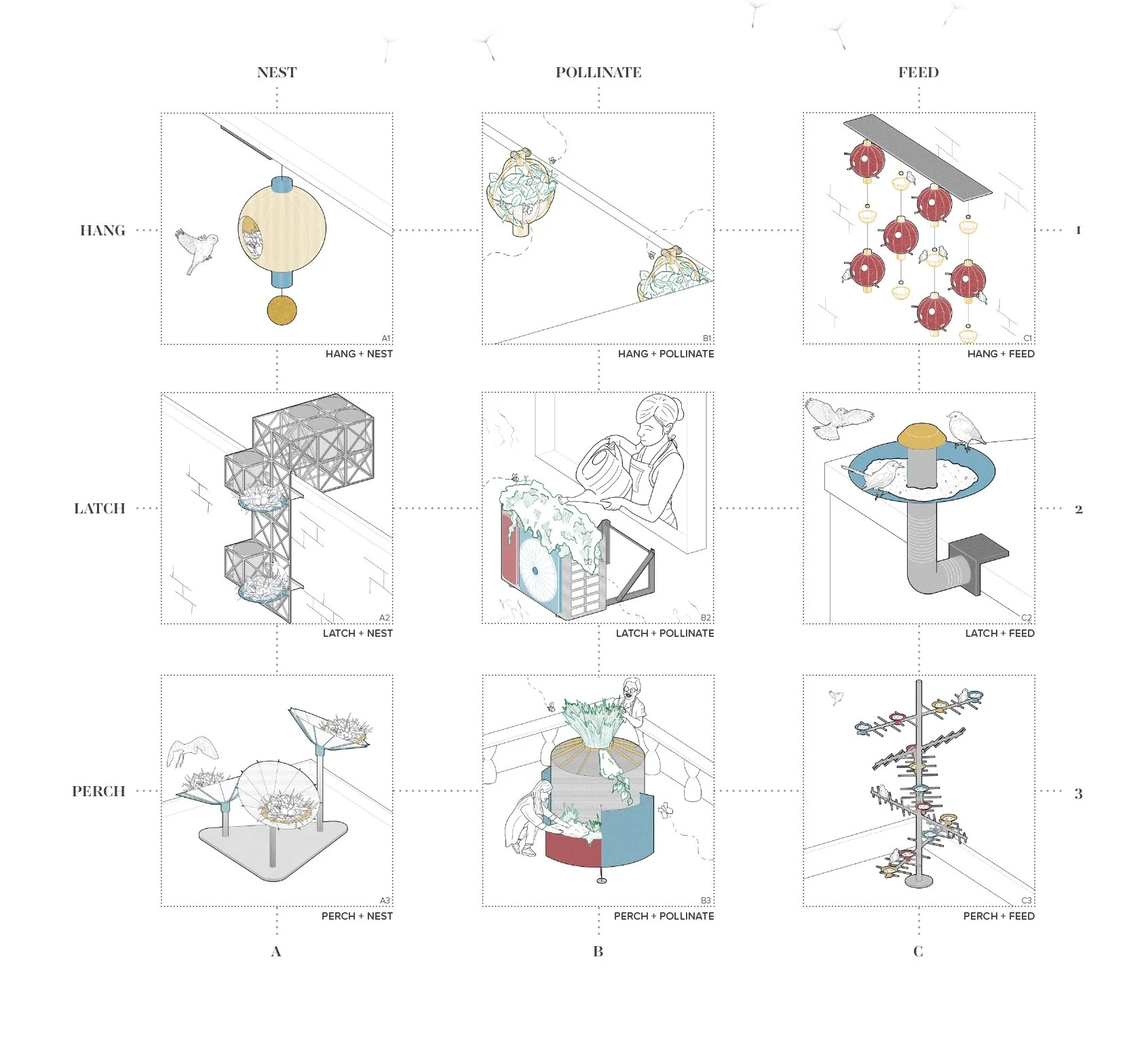
Rewilding Attachment Matrix
Student : Kylee O Dell
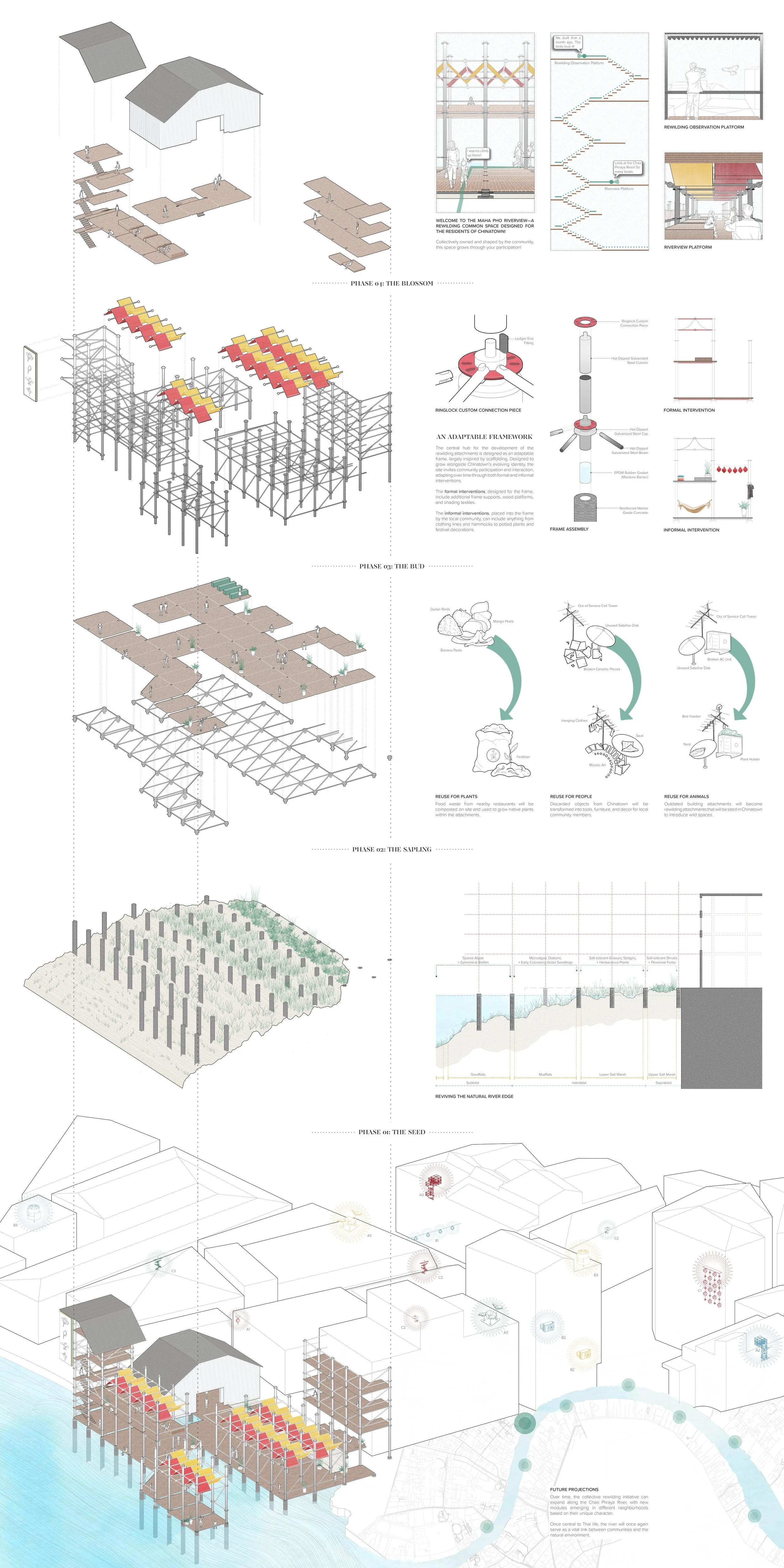
Acts of Attachment : Social Infrastructure for Rewilding Chinatown
Student : Kylee O Dell
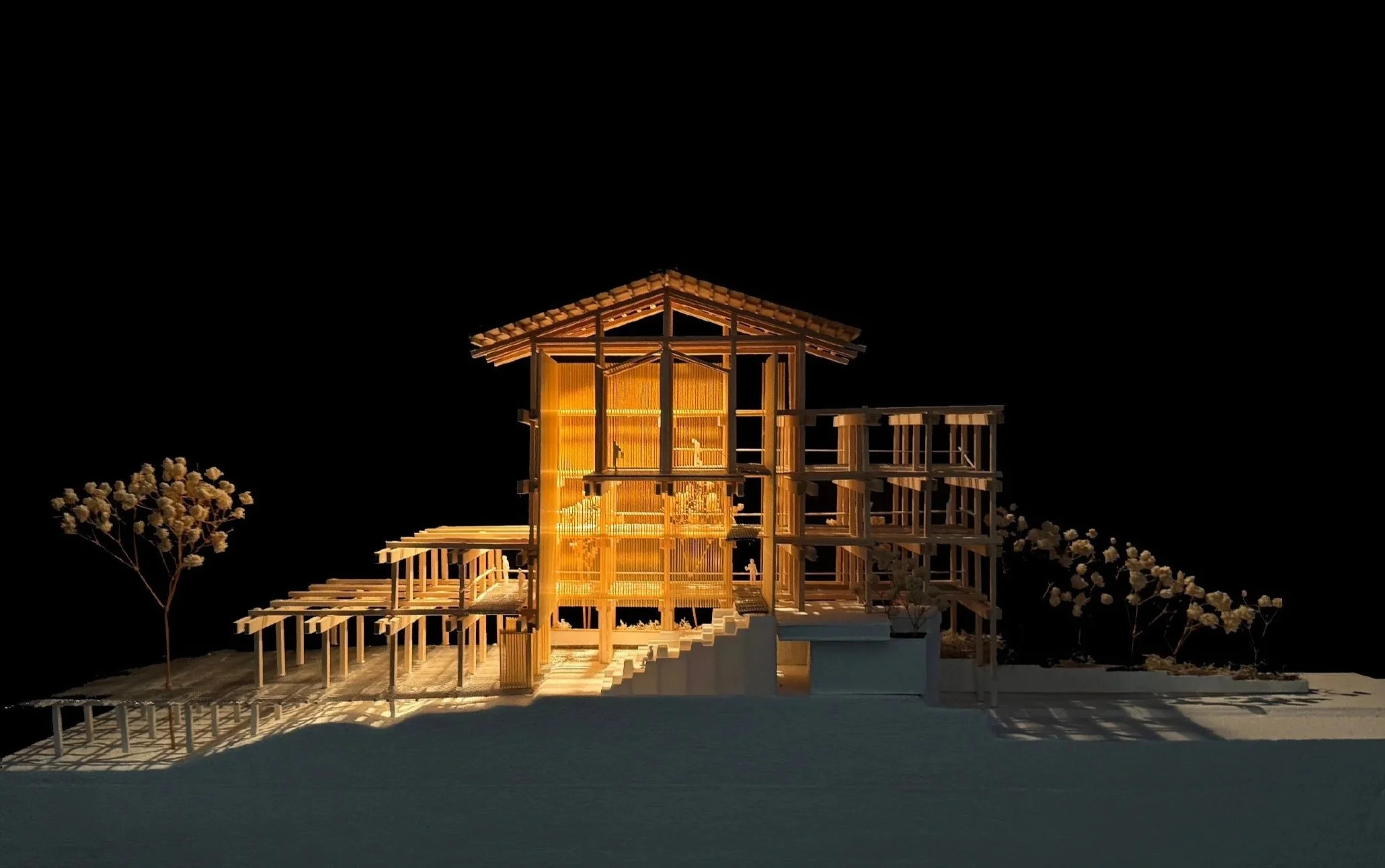
Chinatown Community Center
Student : Miguel Perez